Choosing Padel Shoes: Key Tips to Get It Right First Time
13 de May de 2024 | Updated 17 de April de 2026
If we look back, we can all remember our first steps in padel, where most of us wore any kind of footwear, but I invite you to think about this situation that surely sounds familiar:
Imagine you’re in the third set, the score is tied, and right at a crucial point, your feet decide it’s the perfect moment to remind you that you chose the wrong footwear. Slips, lack of grip, or even a small discomfort can turn not only into the loss of a point but into an injury that keeps you off the court.
Don’t worry, this article won’t turn into a padel horror story, although it could be if you don’t take your shoe choice seriously. Sometimes, we’re so obsessed with rackets and balls that we forget our feet also need the best attention. And boy, do they need it! In this article, we’ll tell you how to choose your padel shoes to avoid that common mistake and ensure you’re as equipped on your feet as you are in your game technique and tactics.
The right shoes will not only make you feel more comfortable but also provide that essential support to move quickly and fearlessly. Whether you need more cushioning for jumps or better grip for those unexpected sprints, choosing well can be the difference between winning or losing, between enjoying the game or suffering through it. And no, we’re not exaggerating, because when the court calls you, the last thing you want is for your shoes to respond with “I can’t.”
According to Your Level
Your level of play and the type of matches you’re exposed to will greatly determine the level of demand you’ll place on your footwear. As you progress, there will be more things you’ll need to consider.
Shoes for Occasional Players
Your main goal is to find shoes with a high grip and above all good comfort, the key is to avoid unwanted slips. For this, we recommend looking for a mixed-type sole from a mid-range, which will provide the versatility you need.
Shoes for Regular Players
If you play more regularly, beyond comfort and grip, it will be important to consider proper cushioning and sufficient impact absorption, so reinforcements in areas like the front will be essential. Believe us, your joints will thank you. For this player segment, we also recommend choosing a mixed-type shoe with good reinforcements to protect against those impacts.
Shoes for Advanced Players
If you find yourself at a high level with a lot of play, beyond grip, comfort, cushioning, and impact absorption, what you’ll need is high resistance, otherwise they will soon lose their initial performance. In this case, you’ll need to consider your budget and where you usually play, whether it’s on mondo carpet with little sand to opt for an omni sole, or if you play in very varied places and go for the high-end mixed type.
Types of Soles
We could compare it to football, where the studs are probably the most important part of the boot. The same goes for padel footwear; our main requirement is to have a good grip on the court, always ensuring safety and good traction. Therefore, we must consider the type of court where we will play most of the time. A worn-out grass court is not the same as one with so much sand it looks like a beach, or the more modern ones with curly hair and very little sand.
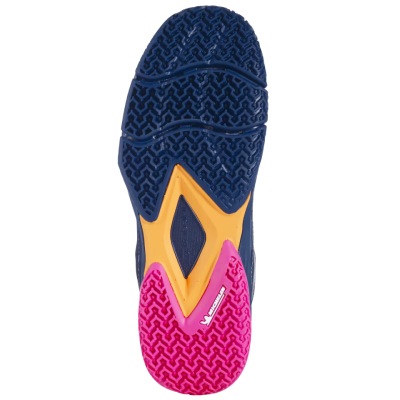
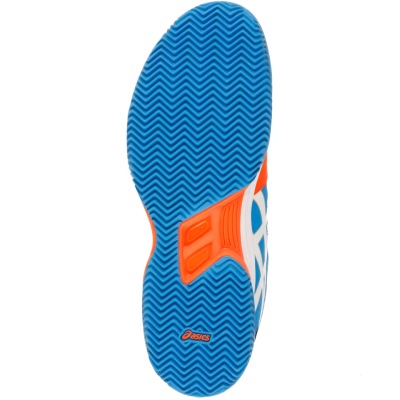
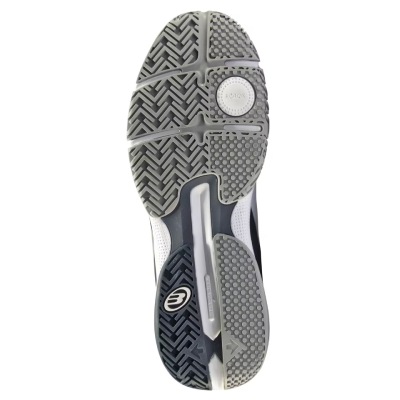
- The clay or herringbone sole is ideal for good grip on poorly maintained courts, old and/or with a lot of sand. It’s no coincidence that this is the pattern used by tennis players on clay courts.
- For more modern courts with grass like that of the World Padel Tour, we can opt for an omni sole similar to the football multitaco, which will give us better sensations on newer courts.
- Finally, the type of shoe most of us will choose is the mixed sole, which will have the advantages of the omni sole but retain the necessary traction on other courts. They combine different herringbone patterns with small individual studs for versatility in any condition.
Support
Our sport is played on a relatively small surface, which we also share with our partner. The game develops very quickly, and that’s why our movements need to be fast and explosive. Therefore, the shoes must be able to withstand these demands and hold the foot in such a way that we feel secure in every lateral movement, start, or sudden stop. Years ago, to achieve this “rigidity,” the shoe’s upper was heavily reinforced, affecting its weight and breathability. Today, we find the use of resistant and lightweight materials, such as mesh with Kevlar threads, providing that stability while maintaining a low weight and allowing ventilation.
Comfort
Perhaps this is the most crucial aspect and could be what everything boils down to. Because you can wear the “best” shoes, but if they don’t fit your foot, you’ll never be completely comfortable with them. Therefore, factors like your own physiology come into play, as not everyone has the same foot shape, way of stepping, body weight, etc.
There are shoes with a wide last, ideal for those with a wide foot, but they won’t fit as well for people with a narrow and long foot.
Another important element is choosing the right size. It seems obvious and evident, but often something taken for granted has fatal consequences. Just as not everyone has the same type of foot, not all brands size the same. A size 44 in Mizuno is not the same as a size 44 in Wilson, for example. This is explained by the fact that Asian feet are generally smaller than American ones (countries of origin of each brand, respectively). A very useful tip is to guide ourselves by the Japanese size, expressed in centimeters, an equal and unequivocal measure, independent of the brand’s country of origin. However, the best thing is undoubtedly to try the shoe in question, and with the socks we use for playing, as they are likely (or should be) thicker and more padded than those used daily.
Cushioning
While our sport isn’t like basketball where long runs or jumps are frequent, we need a minimum of cushioning to avoid straining our heels and joints like the knees. As we mentioned earlier, it greatly depends on each manufacturer the type of cushioning they use and the user themselves. For example, the Gel cushioning used by Asics is very comfortable, but larger or heavier players will find it doesn’t last long. In these cases, it’s better to resort to other technical solutions that don’t deteriorate as quickly under weight. There are many compounds and densities in the rubber used, or different technologies like Nike’s air chambers or Adidas’ Boost. This is perhaps one of the factors that most differentiates, both in performance and price, between high-end shoes and others.
Breathability
Just like in an intense match, where every point can be crucial, breathability in your padel shoes plays a fundamental role in keeping you comfortable and in the best condition to compete. No one wants to end a set with soaked feet, right? That’s why it’s important to consider this aspect.
Excess moisture is not only uncomfortable but can also cause slips inside the shoe, blisters, and other skin problems. Therefore, it’s vital that the footwear not only fits well but also allows your feet to ‘breathe’ throughout the match.
Most high-quality padel shoes are made with synthetic materials and meshes that facilitate ventilation. These materials allow optimal air circulation, helping to evaporate sweat quickly and keeping your feet dry even under pressure. Additionally, some advanced models include specific technologies that further enhance this feature, focusing on critical areas where feet tend to sweat more.
When choosing shoes, consider the climate where you most frequently play. If you’re in a warm and humid area, prioritize models with maximum breathability. However, if you play in colder climates, you might look for a balance between insulation and ventilation to prevent the cold from affecting your performance.
Shoe Weight
A shoe that’s too heavy can be your worst enemy in a match that demands speed and agility. As we progress in our level and face more demanding matches, we’ll notice that lightweight shoes are essential to achieve the speed and ease of movement needed. Additionally, they reduce overall fatigue, allowing you to maintain a high level of play for longer. Not only do you move faster, but you also feel less burdened at the end of the set.
However, it’s not all about being light. The right weight in a shoe should also provide stability and support, especially in lateral movements and quick changes of direction. A shoe that’s too light might not offer the necessary protection against twists or slips, especially on a padel court where explosive movements are the norm.
Finding the perfect balance between lightness and stability is key. The best padel shoes on the market are designed to offer that balance, optimizing the material and structure to ensure they are light enough without compromising support and durability. When choosing shoes, consider your playing style: if you’re more about quick and constant movements, prioritize lightness; if your game is more physical and powerful, make sure your shoes provide enough support.
As you can see, it’s always important to know your playing style to make the right choice, and as you have more demands, you’ll need to opt for higher ranges.
Bonus: Change the Insole
Changing the insole of your shoes can be a literal game-changer; if you’ve done it before, you know what we’re talking about.
The standard insoles that come with most padel shoes are usually sufficient, but they’re not designed for all foot types. Opting for orthopedic or custom insoles can provide the support and cushioning your feet really need. This is especially crucial if you have specific conditions like high arches, flat feet, or if you simply want better support for the plantar fascia.
It’s a minor investment compared to other equipment, but the benefits in terms of comfort and performance are too good to ignore. Plus, you can experiment with different types until you find the one that best suits your needs.
If you want to reduce fatigue in those matches that wear you out the most, don’t hesitate to try this extra in your footwear.

PalaHack
We got the bug for this wonderful sport more than 10 years ago.
We want you to feel that, when you read one of our analyses, it is like receiving advice from those friends with whom you share the court every weekend. If something is not clear or you want to know more, do not hesitate to ask!