
Padel Racket Balance: What It Is and How to Measure It with This Trick
14 de May de 2024 | Updated 17 de April de 2026
Saber dónde se concentra el peso de tu pala puede transformar completamente tu juego. Pero, ¿qué es exactamente el balance de una pala y por qué debería importarte tanto?
El balance de una pala no es solo un detalle técnico; es la esencia que define cómo se siente la pala en tu mano y cómo responde durante el juego. Si alguna vez has sentido que tu pala es una extensión de tu brazo, es probable que su balance tenga mucho que ver con esa sensación. No solo te vamos a explicar qué significa el balance en términos prácticos, sino que también te revelaremos un truco sencillo para medirlo tú mismo, asegurando que cada vez que entres a la pista, lo hagas no solo para competir, sino para ganar.
Qué es el balance de una pala de padel
El balance de una pala de pádel se refiere a cómo se distribuye el peso en tu pala. Es un factor crucial que determina cómo se distribuye el peso a lo largo de la pala, influyendo significativamente en la manera en que se maneja durante el juego. Dependiendo de esta distribución, tu pala puede sentirse más pesada en la cabeza, en el mango, o equilibrada en el centro.

Qué factores influyen
Materiales de Construcción
Los materiales utilizados en la fabricación de la pala influyen significativamente en su balance. Las palas hechas con materiales más ligeros en el marco y más pesados en la cabeza tendrán un balance más alto, lo que se traduce en más potencia pero menos control. Inversamente, materiales más pesados en el mango pueden llevar el balance hacia abajo, aumentando el control y la manejabilidad.
Diseño de la Pala
La distribución del peso en la pala también es afectada por el diseño general de la misma. Por ejemplo, las palas con un perfil más grueso o con tecnologías que añaden más material hacia la cabeza o el mango pueden cambiar el punto de balance. Las dimensiones y la forma de la pala, como ser más alargada o más redonda, igualmente juegan un rol crucial en dónde se centrará el balance.
Modificaciones Adicionales
Los jugadores a menudo personalizan sus palas con accesorios como protectores de cabeza o diferentes tipos de grips, que aunque parecen menores, pueden alterar el balance de forma notable. Un grip más pesado puede bajar el balance, mientras que un protector de cabeza aumentará el peso en la parte superior, elevando el balance hacia un punto más alto.
Desgaste Natural
Con el uso continuo, las palas de pádel pueden sufrir cambios en su balance debido al desgaste de los materiales. Es vital revisar y ajustar periódicamente tu pala para asegurar que su comportamiento siga siendo el óptimo y acorde a tus necesidades.
Tipos de palas de padel según su balance
Como ya sabes, dependiendo de dónde se concentra el peso tendremos una pala con una cabeza pesada, equilibrada o ligera. Cada tipo tiene sus propias ventajas y se adapta a estilos de juego diferentes.
Palas con Balance hacia la Cabeza (Cabeza Pesada)
Este tipo de pala ofrecen más potencia en los golpes, ya sean de remate o voleas. Sin embargo, este tipo de pala puede ser un poco más difícil de manejar, especialmente para los novatos o para jugadas rápidas en la red.
Palas con Balance Medio
Una pala con balance equilibrado ofrece una mezcla perfecta de control y potencia. Este tipo es muy versátil, adecuado para jugadores que disfrutan de un juego variado o que aún están definiendo su estilo. Proporcionan una buena respuesta tanto en golpes de potencia como en juego táctico cerca de la red, haciendo de ellas una opción popular entre jugadores de todos los niveles.
Palas con Balance hacia el Mango (Cabeza Ligera)
Las palas con balance hacia el mango son excepcionales para el control y la maniobrabilidad. Facilitan la ejecución de golpes técnicos y rápidos ajustes de dirección, ideales para los jugadores que prefieren el juego en la red o que tienen un estilo de juego muy ágil. Estas palas ayudan a mejorar la reacción y la precisión, aunque pueden ofrecer menos potencia en golpes desde el fondo de la pista. Además, si eres principiante, esta debe ser tu primera elección.
Cómo medirlo
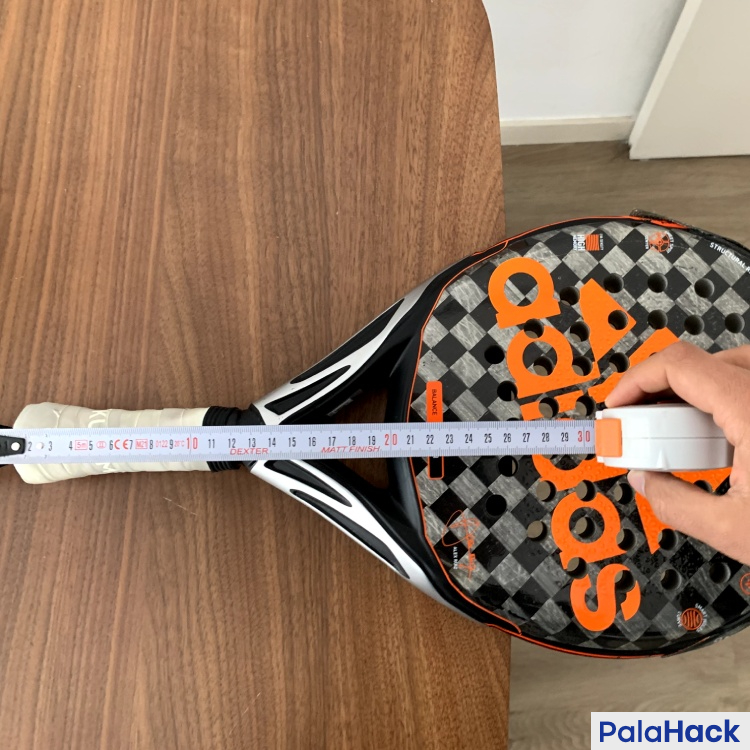
A la hora de medir el balance nuestro objetivo va a ser encontrar el centro de gravedad de la pala y así saber con detalle cómo está distribuida la masa con respecto con su geometría, para ello lo que vamos hacer es lo siguiente:
- Despejamos una mesa.
- Situamos la pala al borde de la mesa, de tal forma que el puño quede dentro de la mesa y la cabeza sobresalga.
- Ajustamos la pala todo lo que podamos hacia fuera hasta que se quede equilibrada y no llegue a caerse.
- Ahora es el momento de trazar una linea en el punto de equilibrio y medir la distancia.
Las palas más cabezonas rondan unos 29cm de distancia entre el punto de equilibrio y el puño, y aquellas con un balance más hacia el mango unos 25cm.

Cómo afecta tu estilo y nivel de juego
Elegir correctamente puede hacer la diferencia entre un buen jugador y un gran jugador. Aquí te explicamos cómo el balance influye en tu rendimiento en la pista.
Jugadores de Ataque
Si tu estilo de juego es ofensivo y te gusta dominar desde la línea de fondo con potentes remates, una pala con balance hacia la cabeza (cabeza pesada) será tu mejor aliada. Este tipo de balance te ayuda a generar más potencia en cada golpe, lo que es crucial cuando buscas terminar los puntos rápidamente. Sin embargo, este tipo de pala requiere que tengas una buena técnica y suficiente fuerza física para manejar el peso extra en la cabeza sin comprometer tu velocidad de reacción.
Jugadores de Control
Para aquellos que prefieren un juego más táctico y basado en el control, una pala con balance hacia el mango (cabeza ligera) es ideal. Este tipo de pala mejora la maniobrabilidad y facilita la precisión en los golpes, permitiéndote colocar la bola exactamente donde quieres. Es especialmente útil si te encanta jugar en la red o realizar golpes que requieren una alta precisión y un rápido ajuste de muñeca.
Jugadores Versátiles
Los jugadores que disfrutan de un juego equilibrado, que combinan tácticas de fondo con incursiones en la red, se beneficiarán de una pala con balance equilibrado. Esta configuración proporciona una mezcla saludable de potencia y control, permitiendo una transición fluida entre diferentes estilos de juego sin sentir que la pala favorece uno sobre el otro.
Consideraciones de Nivel
Para los principiantes, una pala con balance hacia el mango puede ser más indulgente y fácil de manejar, ayudando a desarrollar la técnica sin forzar demasiado el brazo. Los jugadores avanzados, en cambio, pueden preferir palas con balance hacia la cabeza para maximizar la potencia de sus golpes, asumiendo que tienen la técnica y la condición física para manejar dicho balance.
Elegir una pala con el balance adecuado para tu estilo y nivel de juego es crucial para maximizar tu rendimiento y disfrute en la pista. Cada jugador es único, y encontrar la pala perfecta es un paso esencial para mejorar y disfrutar cada momento del juego. ¡Asegúrate de considerar cómo el balance afecta cada aspecto de tu juego antes de hacer tu elección!
Bonus: Cómo modificar el balance
Esto puede parecer que solo está enfocado para profesionales, pero con unos pocos trucos, cualquier jugador puede personalizar su pala para que se adapte mejor a su estilo de juego. Descubre cómo:
Añadir Peso en la Cabeza
Si queremos que sea un poco más sencillo mover la pelota y además queremos añadir algo pegada en nuestros remates podemos hacer uso de cintas de tungsteno en el extremo más alejado del puño, de esta manera tendremos mayor inercia en los remates de potencia. Estamos hablando que tu pala actual no tiene suficiente pegada sobre todo en lo que se refiere al juego por arriba.
Cambiar el balance hacia abajo
En el caso que tengas mayor peso concentrado en la cabeza del que te gustaría ya que no estas del todo contendo por distintos motivos, posibles problemas de codo o simplemente que queremos suprimir el balance por que queremos tener más control en el juego en defensa o por abajo.
En este caso también podremos hacer uso de cintas de tungsteno añadiéndolas en el corazón de la pala o en la base del mango, depende de cuánto queramos modificar, lo recomendable es ir poco a poco añadiendo el peso para no quedarse ni cortos ni pasarnos.
PalaHack
We got the bug for this wonderful sport more than 10 years ago.
We want you to feel that, when you read one of our analyses, it is like receiving advice from those friends with whom you share the court every weekend. If something is not clear or you want to know more, do not hesitate to ask!